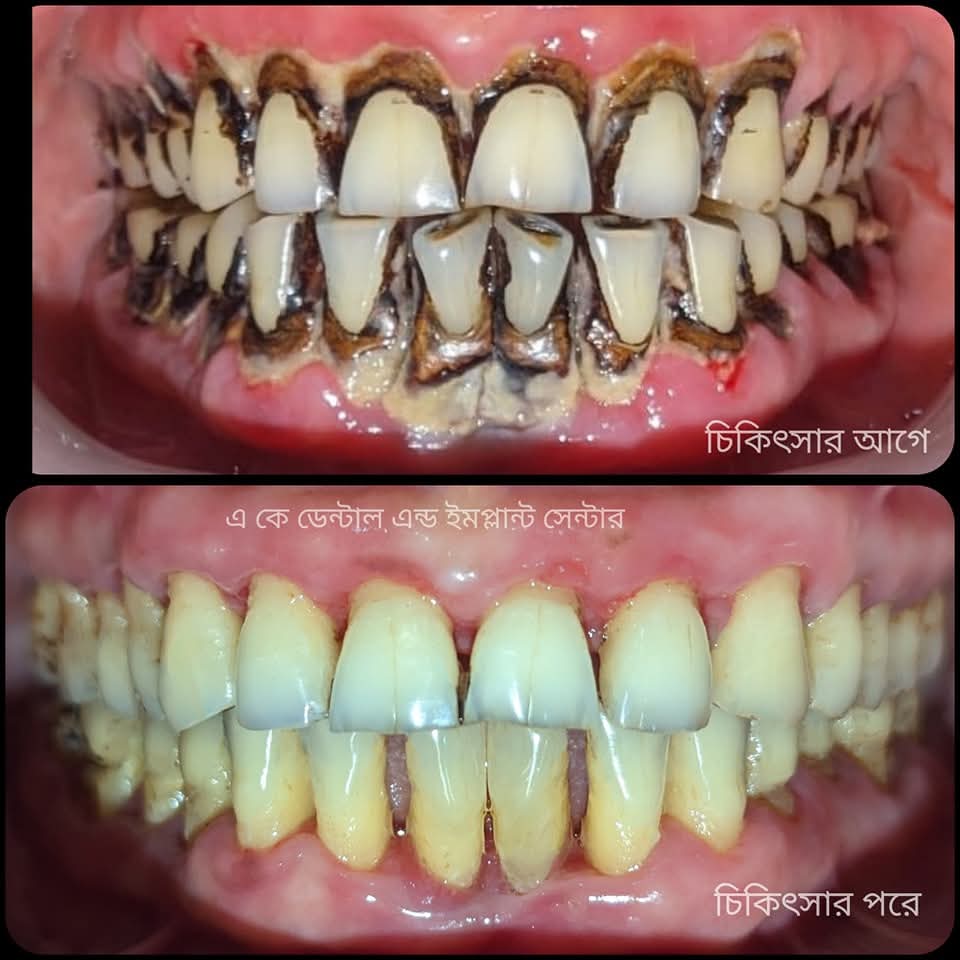
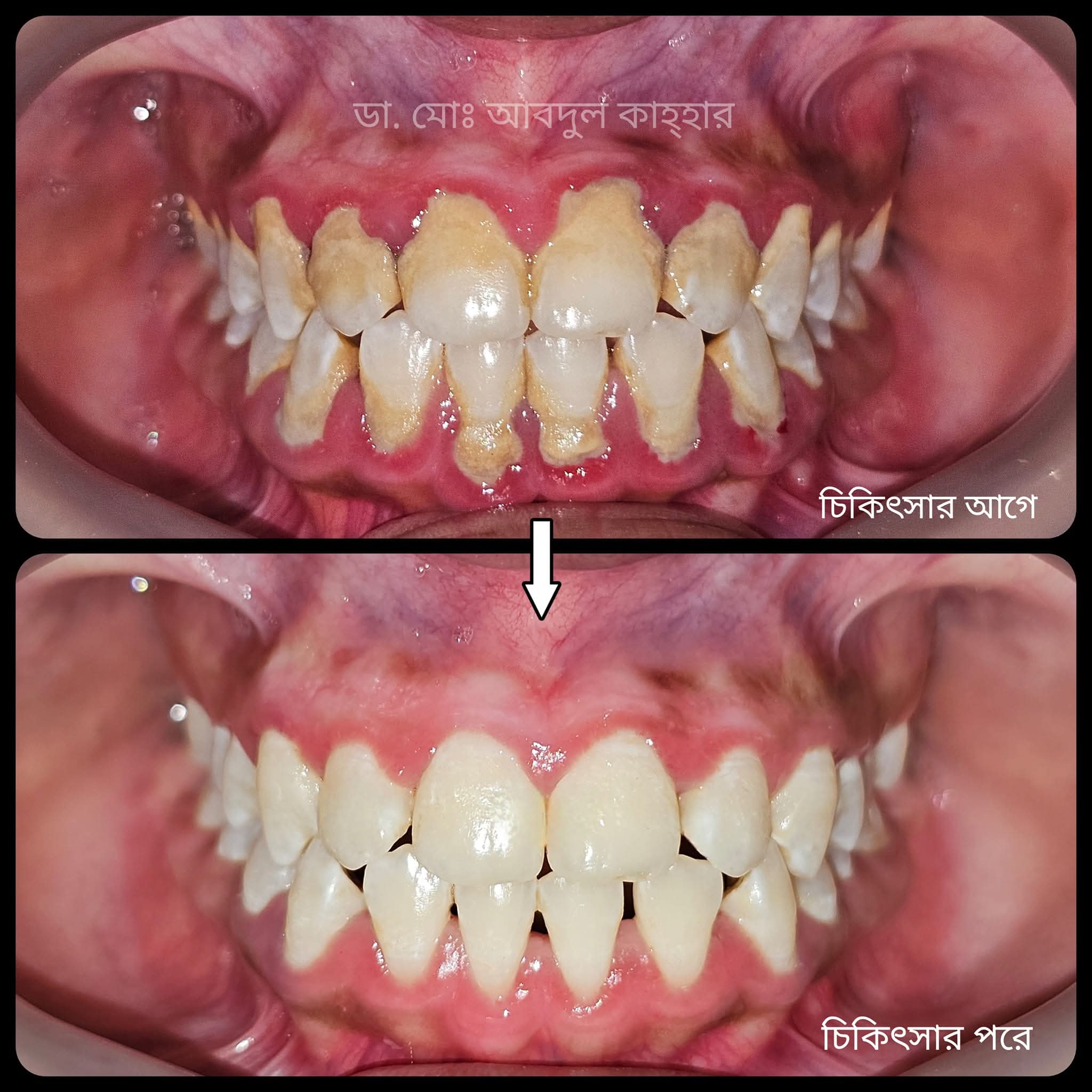
Soft plaque hardens into calculus (tartar) within 24–72 hours. Tartar cannot be removed by brushing — only a dental scaler can take it off. Left in place, it inflames the gums, causes bleeding, and gradually destroys the bone supporting the teeth.
How scaling is done
We use an ultrasonic scaler, which breaks tartar apart using high-frequency vibration and a water jet. Enamel is not damaged. After the tartar is removed, polishing smooths the tooth surface with a rubber cup and prophy paste, so new plaque takes longer to build up.
Common myths
- "Scaling creates gaps between teeth" — false. The gaps were already there, hidden by tartar that was eroding the gum.
- "Scaling weakens teeth" — false. The ultrasonic tip works on deposits, not enamel.
- "Once you start, you must keep doing it" — false. Repeat visits are needed because tartar re-forms, not because of the procedure.
After scaling
Mild sensitivity for 2–3 days, especially to cold, is normal and resolves on its own. A desensitising toothpaste helps. Avoid very hot or very cold food for a couple of days.
How often?
Usually every 6–12 months. Smokers, betel-nut and zarda users, heavy tea or coffee drinkers, and people with diabetes may need it every 4–6 months.