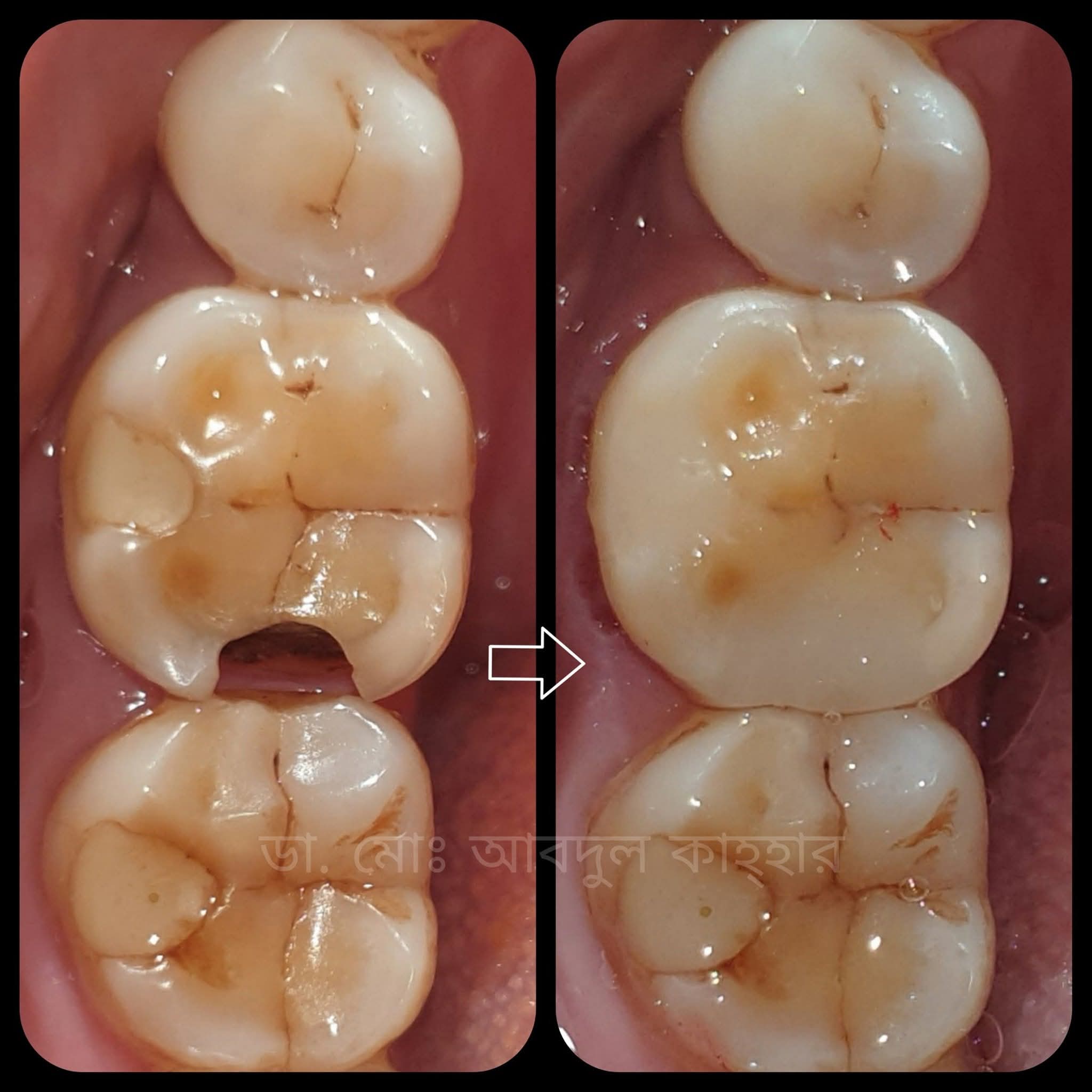
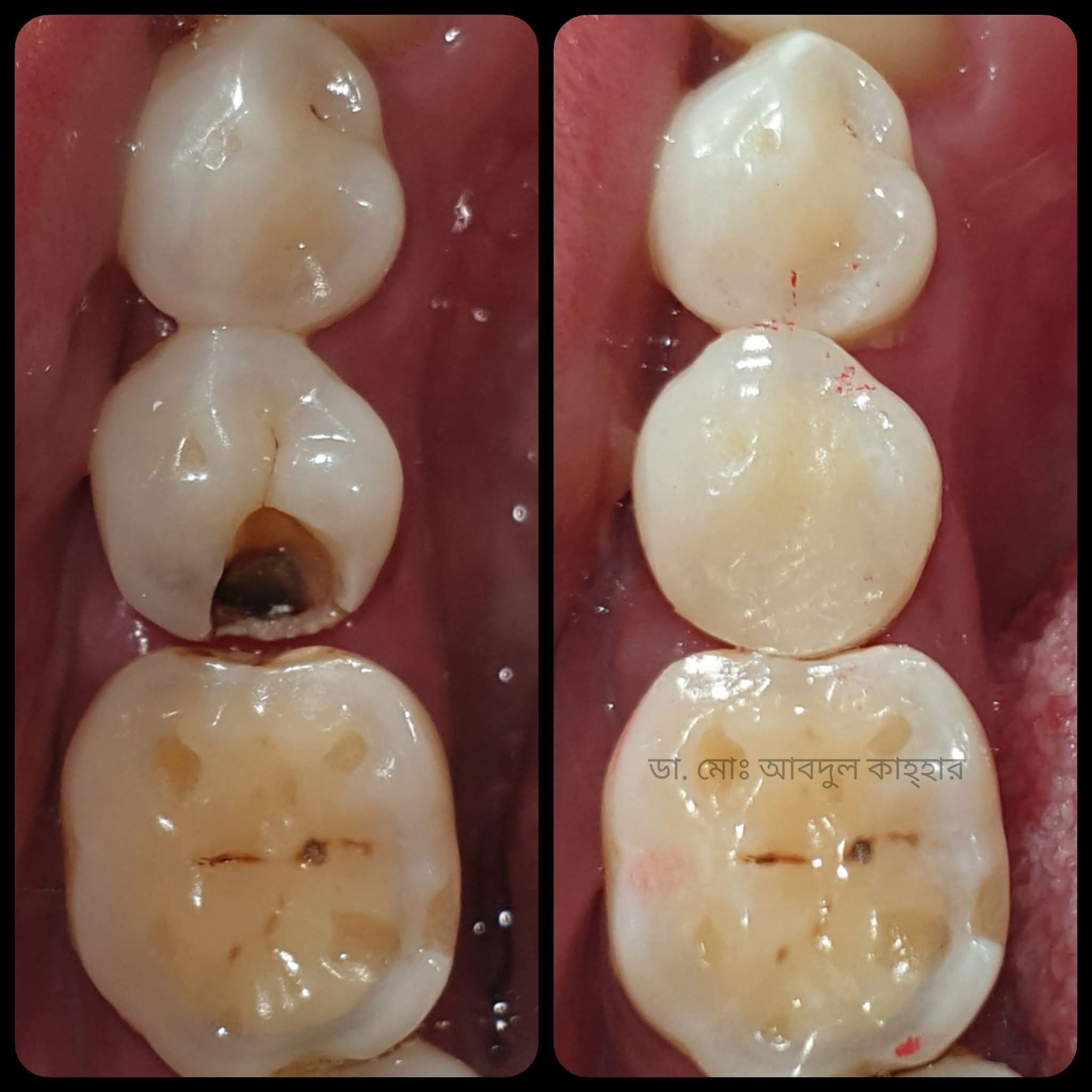
When a tooth decays, the damaged structure is removed and a filling material restores its shape and function. Filling early avoids the need for a root canal or extraction later.
Which filling for whom
Composite (tooth-coloured)
Our first choice. The shade is matched to your natural tooth so the filling is invisible. Suitable front and back. Light-cured immediately, so you can eat the same day.
Glass ionomer (GIC)
Releases fluoride, making it well suited to children's teeth and decay near the gum line.
Amalgam (silver)
Durable and economical, but metallic in colour. Now used mainly on back teeth where appearance is not a concern.
What is a cosmetic filling?
Beyond repairing decay, cosmetic bonding corrects chipped corners, gaps (diastema), shape irregularities and stains on front teeth. It costs far less than veneers and can reshape a smile in a single sitting.
The procedure
- Local anaesthesia if required
- Complete removal of decayed structure
- Shade selection to match the natural tooth
- Composite placed in layers and light-cured
- Bite checked, then shaped and polished
How long do fillings last?
A well-placed composite filling lasts 5–10 years. Avoiding hard objects (ice, nut shells, bone) and keeping up regular check-ups extends its life.