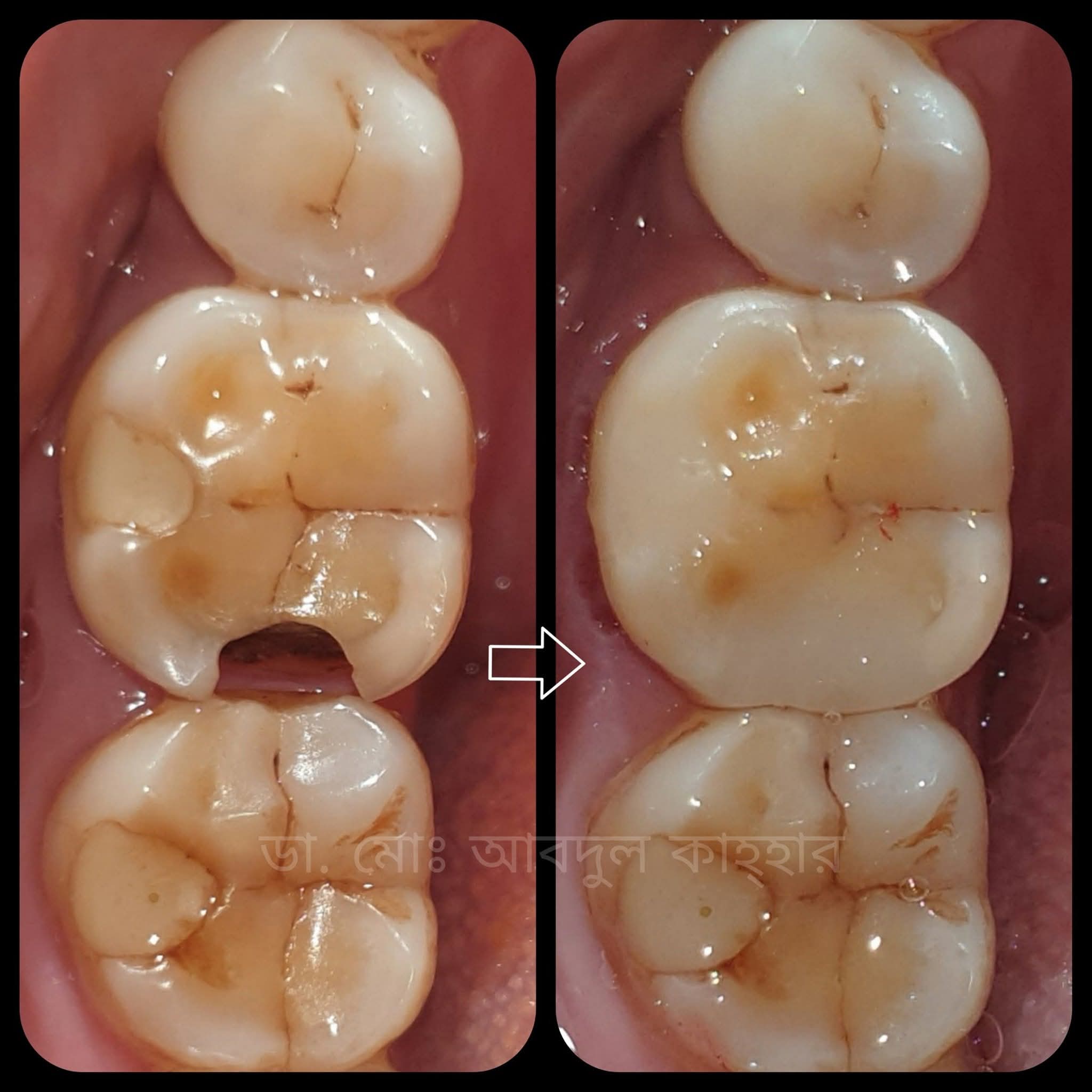
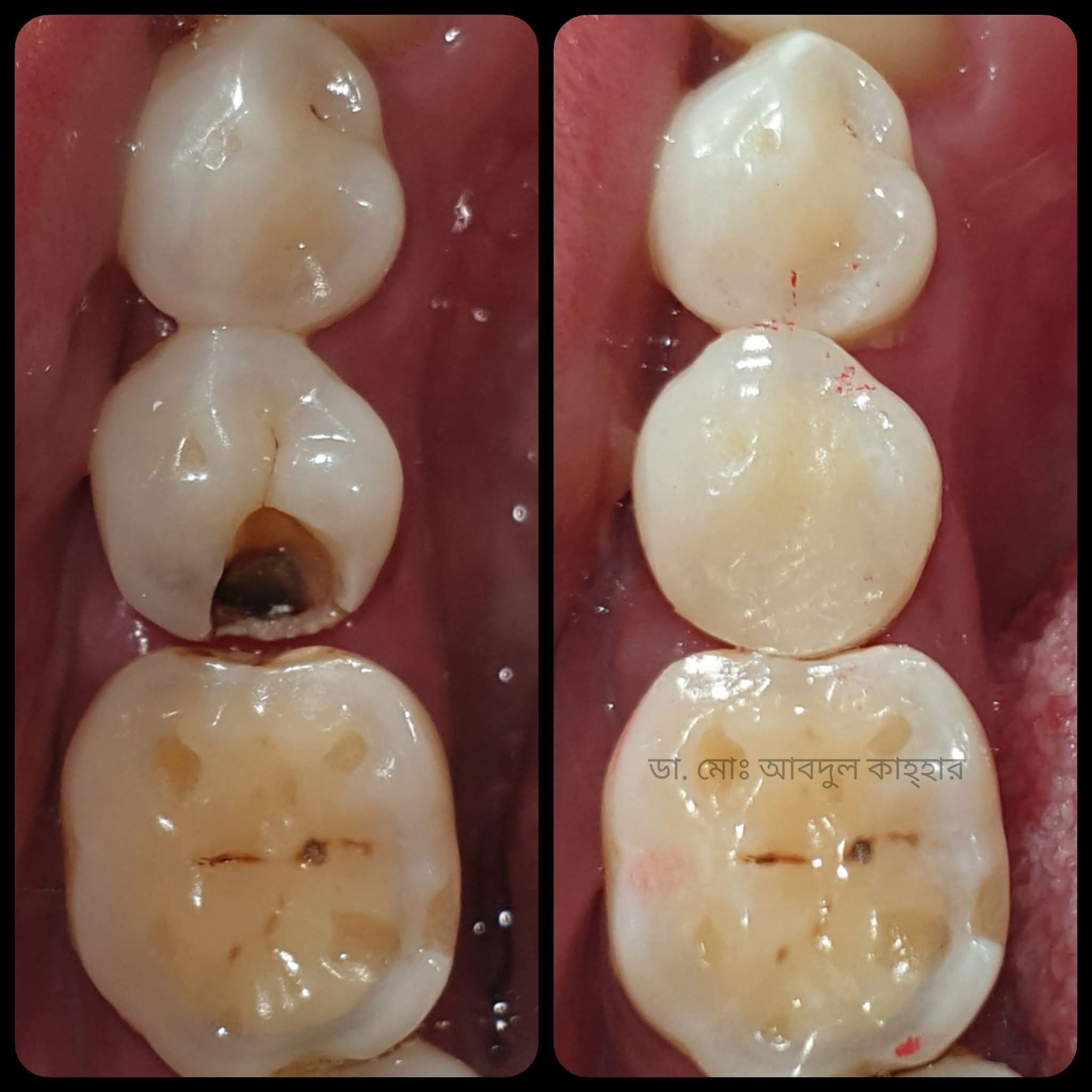
A crown (cap) is an artificial covering that encases a damaged tooth completely, protecting it from fracture and restoring shape, colour and chewing function.
When a crown is needed
- After a root canal — the most common reason; treated teeth become brittle.
- When too much tooth is broken or lost to hold a filling
- A cracked tooth
- As a support for a bridge
- To restore an implant
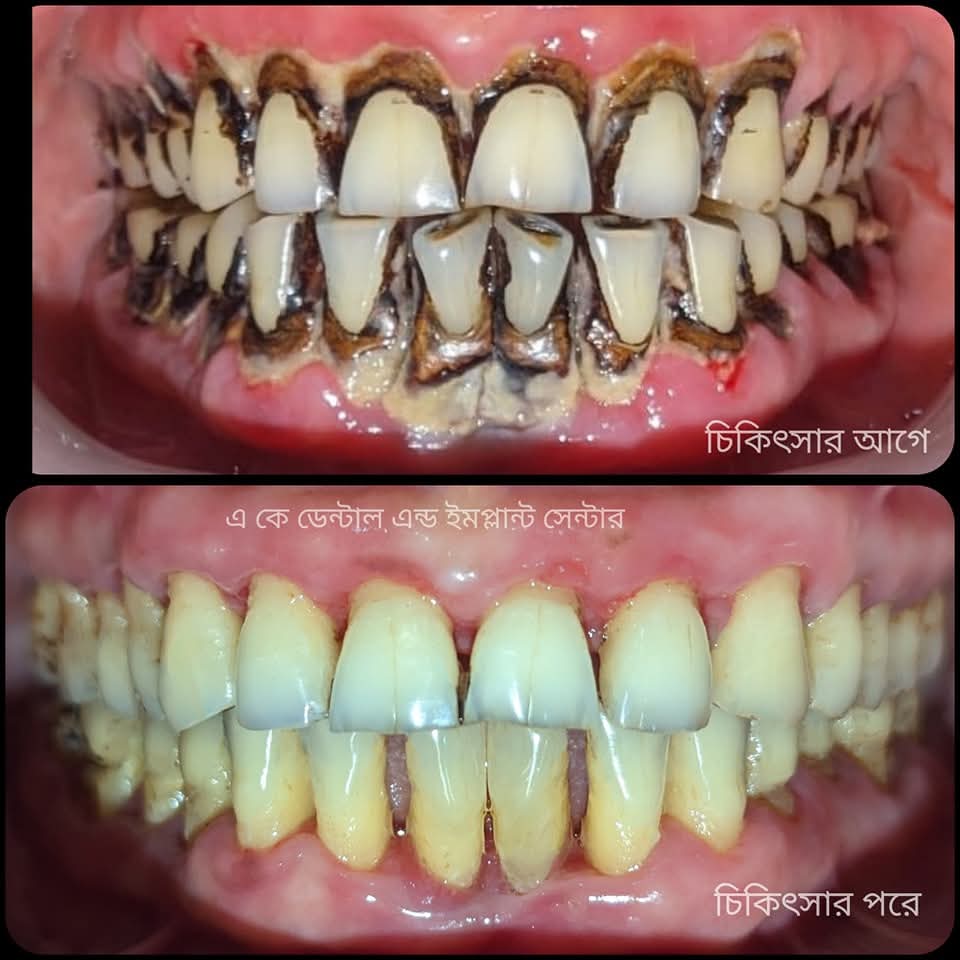
- To improve a badly discoloured or misshapen tooth
Types of crown
Zirconia
The best option available today — very strong, completely metal-free, and translucent like natural enamel. Suitable front and back, with no dark line at the gum.
Porcelain fused to metal (PFM)
A metal core under porcelain. Strong and more economical, but a dark line can appear at the gum margin over the years.
Full metal
The most durable, requiring least tooth reduction. Used mainly on rear molars because of its colour.
The procedure
Visit one: the tooth is numbed and prepared, an impression is taken, and a temporary crown fitted. Visit two (7–10 days later): the lab-made crown is checked for fit, shade and bite, then cemented permanently.
Aftercare
Keep brushing and cleaning between the teeth — the crown will not decay, but the natural tooth at its margin can. Avoid biting very hard objects. Well cared for, a crown lasts 10–15 years or more.