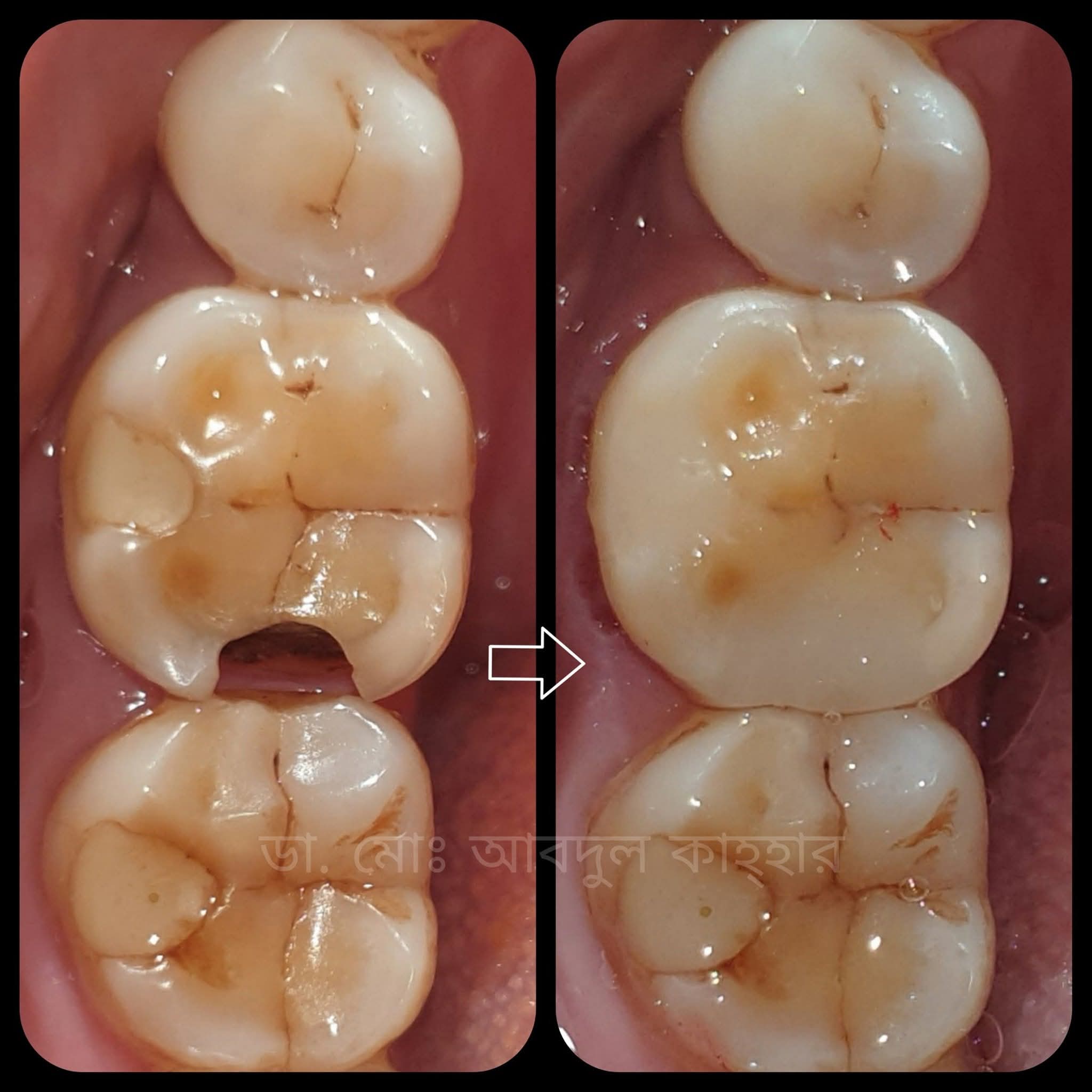
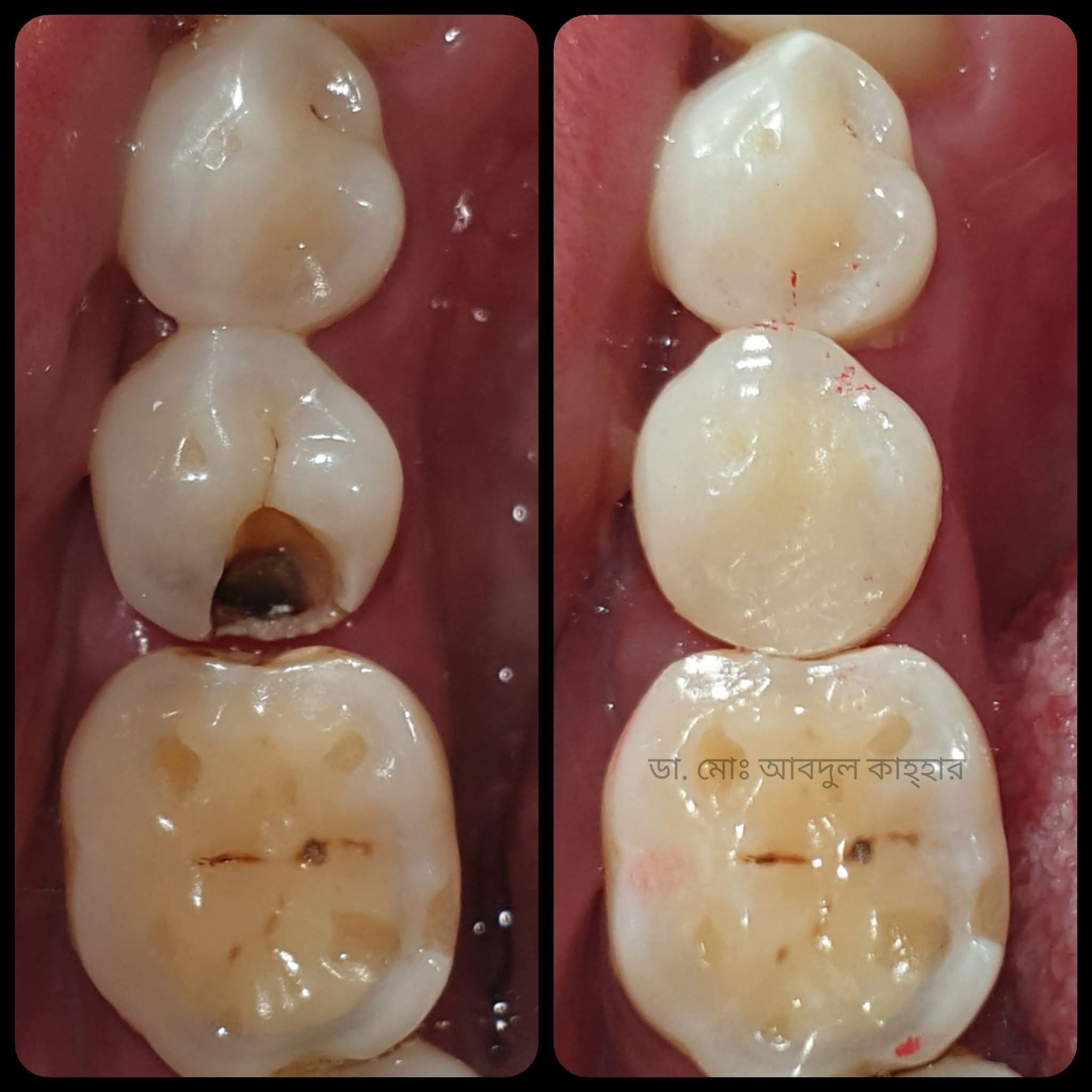
A bridge replaces one or more missing teeth. Crowns are fitted on the teeth either side of the gap, joined to an artificial tooth (pontic) in the middle, and the whole unit is cemented permanently in place.
What happens if you leave a gap
- Neighbouring teeth tilt into the space
- The opposing tooth over-erupts
- The bite changes, sometimes causing jaw joint pain
- Food traps, increasing decay and gum disease
- Jawbone gradually resorbs
Bridge or implant?
An implant is better long term — it spares the adjacent teeth and preserves bone. A bridge suits cases where treatment must finish quickly, bone is inadequate and grafting is not an option, the adjacent teeth already need crowns, or budget is limited. We explain both and leave the decision with you.
The procedure
- Teeth either side are numbed and prepared
- Impression taken and a temporary bridge fitted
- Bridge fabricated in the lab (7–10 days)
- Fit, shade and bite checked, then cemented
Aftercare
Food packing under the bridge is the main risk. Clean beneath the pontic daily with superfloss or an interdental brush — otherwise the supporting teeth decay and the bridge fails. Well maintained, a bridge lasts 10–15 years.